
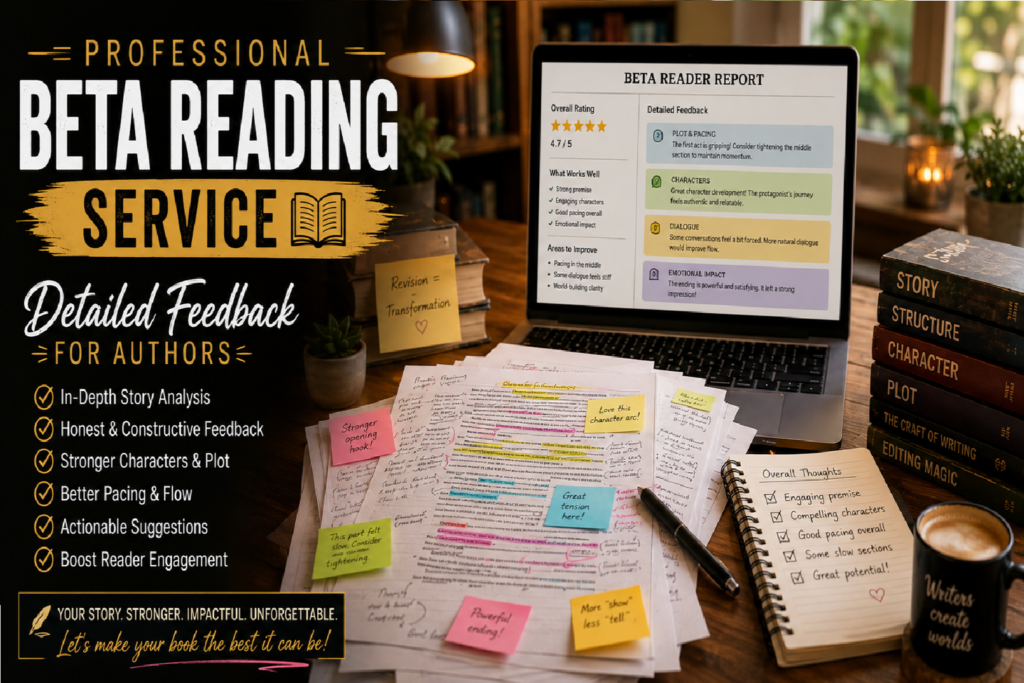
Best Freelance Beta Reading Services – Affordable, Professional & Fast

You’ve finished your manuscript. Furthermore, you’ve self-edited multiple times and you’re fairly happy with the result. However, before investing in professional editing or hitting publish, there’s one crucial step that smart authors never skip — affordable beta reading service.
In fact, beta reading is the secret weapon of successful authors worldwide. Moreover, it gives you real reader feedback before your book reaches the public — when you can still make meaningful changes. Consequently, books that go through professional beta reading consistently outperform those that don’t in terms of reviews, reader satisfaction, and long-term sales.
Therefore, in this complete guide, you’ll discover exactly what beta reading is, why your manuscript needs it, how much it costs in 2026, and where to find the best affordable beta readers today.
What Is a Beta Reading Service?
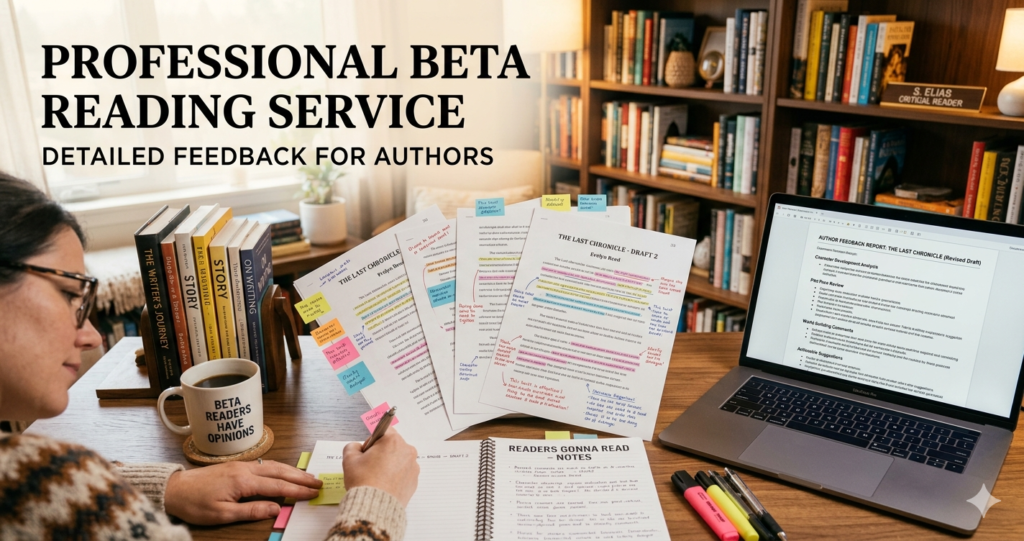
A beta reading service provides your manuscript to experienced readers who evaluate it from a genuine reader’s perspective — before publication. Furthermore, unlike professional editors who focus on technical correctness, beta readers focus on the reader experience itself.
Moreover, beta readers answer the questions that matter most to authors: Is the story engaging from page one? Do the characters feel real and compelling? Is the pacing too slow in certain sections? Does the ending satisfy? Additionally, do any plot holes or inconsistencies break immersion?
As a result, beta reading gives you invaluable intelligence about how real readers will experience your book — intelligence that no amount of self-editing can replicate.
What Does a Beta Reader Actually Do?

A professional beta reader reads your complete manuscript and provides structured, detailed feedback covering:
Overall Impression — Their honest reaction to your book as a whole reading experience. Furthermore, this includes whether they would recommend it to others in your target audience.
Plot and Structure — Whether the story flows logically, builds tension effectively, and resolves satisfyingly. Moreover, they identify any plot holes, pacing issues, or structural weaknesses that undermine the reading experience.
Character Development — Whether your characters feel authentic, consistent, and compelling. Additionally, they flag any character behavior that feels inconsistent or unconvincing.
Pacing Analysis — Identifying sections where the story drags or rushes too quickly. Consequently, you know exactly where readers lose interest or feel rushed.
Dialogue Effectiveness — Whether your dialogue sounds natural and serves the story. Furthermore, they identify any dialogue that feels stilted, unnatural, or out of character.
World Building — For fantasy, sci-fi, and historical fiction specifically, beta readers evaluate whether your world feels believable, consistent, and immersive. As a result, you catch world-building inconsistencies before they generate negative reviews.
Emotional Impact — Whether the emotional beats of your story land effectively. Moreover, they tell you which scenes moved them, surprised them, confused them, or disappointed them.
Why Every Author Needs Beta Reading Before Publishing

Many authors skip beta reading because they’re eager to publish or concerned about the cost. However, this decision consistently proves costly in the long run. Therefore, here’s exactly why professional beta reading is non-negotiable for serious authors.
It Catches Problems Editors Miss
First and foremost, beta readers catch a completely different category of problems than editors. Furthermore, while editors focus on technical correctness, beta readers reveal reader experience issues — the kind that generate one-star reviews mentioning “boring middle section” or “characters I couldn’t connect with.”
Moreover, these reader experience problems are invisible to the author because you’re too close to your own work. Consequently, only a fresh reader perspective reveals them clearly. Therefore, beta reading and professional editing complement each other — you need both.
It Saves You Money on Editing
Additionally, identifying major structural problems through beta reading before professional editing saves significant money. For instance, if a developmental editor discovers that your entire second act needs restructuring, you’ll pay for editing work that then needs to be redone.
On the other hand, if beta readers identify the same structural problem first, you fix it before paying for editing. As a result, your editing investment goes further because the editor works on an already-improved manuscript.
It Validates Your Story Before Launch
Furthermore, positive beta reader feedback gives you genuine confidence before launch. Moreover, knowing that real readers in your target audience connected with your story, loved your characters, and couldn’t put it down is invaluable emotional fuel for the often-stressful publishing process.
Consequently, beta reading transforms your launch from a leap of faith into a calculated, confident move backed by real reader data.
It Generates Pre-Launch Buzz
Additionally, beta readers who love your book become your first enthusiastic advocates. Furthermore, many authors turn beta readers into ARC (Advance Review Copy) readers who post reviews on launch day. As a result, your book launches with social proof already in place — dramatically improving its visibility and credibility.
Types of Beta Reading Services Available in 2026
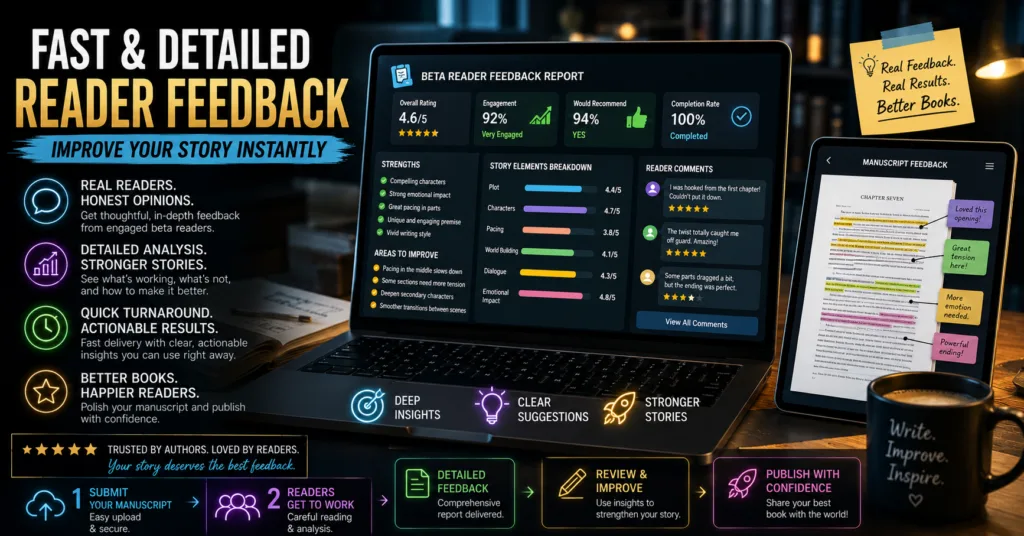
Not all beta reading services are identical. Therefore, understanding your options helps you choose the right service for your manuscript and goals.
Standard Beta Reading
Standard beta reading is the most common and affordable option. Furthermore, a single experienced beta reader reads your complete manuscript and provides structured written feedback covering all major elements — plot, characters, pacing, dialogue, and overall impression.
Moreover, standard beta reading is delivered as a detailed feedback document — typically 3–10 pages of comprehensive notes. As a result, you receive actionable, specific feedback you can immediately use to improve your manuscript.
Additionally, standard beta reading is the best starting point for most authors — particularly first-time publishers and those working within a budget.
Multiple Beta Reader Packages
Furthermore, multiple beta reader packages provide feedback from 3–5 different readers simultaneously. As a result, you get a broader range of perspectives and can identify patterns — issues mentioned by multiple readers are almost certainly real problems worth addressing.
Moreover, multiple reader packages are particularly valuable because individual reader preferences vary significantly. For instance, one reader might love your pacing while another finds it slow. Consequently, feedback from multiple readers helps you distinguish genuine manuscript weaknesses from individual taste preferences.
Genre-Specific Beta Reading
Additionally, genre-specific beta reading pairs your manuscript with readers who exclusively read your genre. For instance, a romance beta reader understands genre expectations like emotional tension, chemistry between leads, and satisfying romantic resolution.
Furthermore, genre specialists provide feedback calibrated to what your specific target audience expects and desires. Consequently, their feedback is significantly more actionable than feedback from generalist readers.
Sensitivity Reading
Moreover, sensitivity reading is a specialized beta reading service that evaluates your manuscript for authentic, respectful representation of marginalized communities, cultures, identities, and experiences. Furthermore, sensitivity readers bring lived experience to their reading — expertise no generalist reader or editor can replicate.
As a result, sensitivity reading protects your reputation, ensures authentic representation, and prevents unintentional harm or offense. Consequently, it’s particularly important for any manuscript featuring characters from backgrounds different from the author’s own experience.
Chapter-by-Chapter Beta Reading
Finally, chapter-by-chapter beta reading provides running feedback as your reader progresses through your manuscript. Furthermore, this format captures immediate reader reactions — the confusion, excitement, or disappointment felt in real time.
Moreover, real-time reactions are particularly valuable for identifying exactly where reader engagement drops or spikes. As a result, you get granular, location-specific feedback rather than impressions filtered through the lens of the complete reading experience.
How Much Does Beta Reading Cost in 2026?
Understanding beta reading pricing helps you plan your pre-publication budget effectively. Therefore, here’s a complete pricing breakdown across all service tiers.
💚 Budget Tier — $15 to $60
What you get:
- Single experienced beta reader
- General feedback document (2–4 pages)
- Overall impressions and major issues identified
- Plot and character feedback
- Basic pacing notes
- Delivered within 7–14 days
Best for: First-time authors, short manuscripts under 50,000 words, authors testing a new genre or pen name, and anyone needing basic reader perspective feedback on a tight budget. Furthermore, this tier is perfect if you primarily want to confirm your story works before investing in professional editing.
Turnaround time: 7–14 days
💛 Standard Tier — $60 to $200
What’s included:
- Single specialist beta reader in your genre
- Comprehensive feedback document (5–10 pages)
- Detailed chapter-by-chapter notes
- Plot, character, pacing, dialogue, and world-building analysis
- Emotional impact assessment
- Specific improvement suggestions throughout
- 2 follow-up questions answered after delivery
Best for: Serious indie authors preparing for publication, authors who have already self-edited thoroughly, and anyone who wants comprehensive, actionable feedback from a genre specialist. Moreover, this tier delivers the depth of insight that meaningfully improves manuscript quality before editing investment.
Turnaround time: 10–21 days
🔴 Premium Tier — $200 to $500+
What’s included:
- Multiple beta readers (3–5 readers) simultaneously
- Individual feedback documents from each reader
- Consolidated feedback summary highlighting common themes
- Genre specialist readers included
- Sensitivity reading included in some packages
- Detailed editorial-style annotations throughout manuscript
- Consultation call with lead reader included
- Follow-up revision read available
Best for: Authors with significant publishing investment, anyone launching a series, authors who want comprehensive multi-reader perspectives, and books covering sensitive topics requiring sensitivity reading. Furthermore, this tier provides the most complete pre-publication intelligence available — giving you absolute confidence before investing in editing and launch.
Turnaround time: 14–28 days
Beta Reading Cost by Manuscript Length
| Word Count | Budget Tier | Standard Tier | Premium Tier |
|---|---|---|---|
| Under 20,000 | $15 – $30 | $40 – $80 | $100 – $200 |
| 20,000 – 50,000 | $30 – $60 | $80 – $150 | $200 – $350 |
| 50,000 – 80,000 | $50 – $100 | $120 – $200 | $300 – $450 |
| 80,000 – 120,000 | $80 – $150 | $180 – $300 | $400 – $600 |
| 120,000+ | $120 – $200 | $250 – $400 | $500+ |
What Makes a Great Beta Reader?

Not every reader makes a great beta reader. Therefore, understanding what separates excellent beta readers from mediocre ones helps you hire the right person.
They Read Widely in Your Genre
First and foremost, great beta readers are voracious readers in your specific genre. Furthermore, deep genre familiarity means they understand reader expectations, tropes, conventions, and what makes books in your category succeed or fail commercially. Consequently, their feedback is calibrated to your actual target audience.
They Provide Specific, Actionable Feedback
Moreover, great beta readers don’t just tell you something “didn’t work” — they explain specifically why it didn’t work and often suggest how it could be improved. Furthermore, vague feedback like “I got bored in the middle” is far less valuable than “The subplot introduced in chapter seven felt disconnected from the main narrative for three chapters, which broke my investment in the story.”
As a result, always look for beta readers whose sample feedback demonstrates this level of specificity and actionability.
They’re Honest Without Being Cruel
Additionally, the best beta readers balance honesty with respect. Furthermore, they understand that honest, constructive criticism — even when difficult to hear — is ultimately more valuable to the author than empty praise. Consequently, they deliver difficult feedback with sensitivity and professionalism.
They Meet Their Commitments
Moreover, reliability is non-negotiable. A beta reader who accepts your manuscript and then disappears for months without delivering feedback causes real damage to your publishing timeline. Therefore, always look for beta readers with verified track records of delivering feedback within agreed timeframes.
They Ask Smart Questions First
Finally, professional beta readers ask clarifying questions before beginning — about your target audience, your genre, any specific concerns you have, and what type of feedback you most need. As a result, their reading is focused and their feedback is aligned with your actual needs.
How to Prepare Your Manuscript for Beta Reading
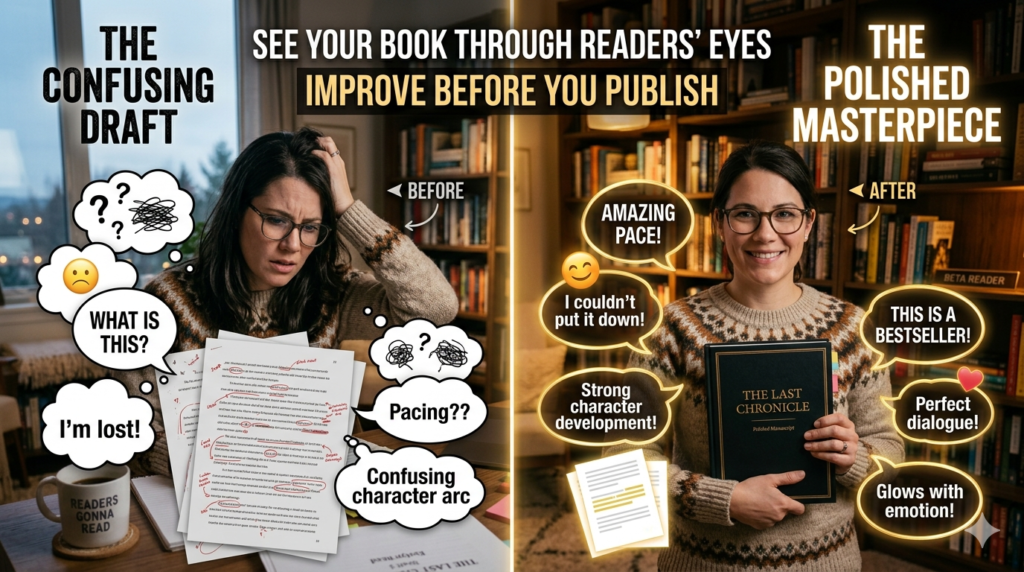
Getting your manuscript ready before submitting to beta readers maximizes the quality of feedback you receive. Therefore, follow these preparation steps first.
Complete Your Self-Edit
First and foremost, do a thorough self-edit before sending to beta readers. Furthermore, fix obvious grammar errors, typos, and inconsistencies yourself first. As a result, your beta readers focus on reader experience issues rather than technical problems — giving you far more valuable feedback per dollar spent.
Write a Clear Beta Reader Brief
Additionally, provide your beta readers with a brief that includes your genre, target audience, word count, and any specific areas you want feedback on. For instance, if you’re particularly concerned about your ending or a specific character’s motivation, mention it explicitly. Consequently, your beta readers can pay special attention to the areas that matter most to you.
List Your Specific Questions
Furthermore, prepare a list of specific questions you want your beta readers to answer. For example:
- Did you connect with the protagonist from the beginning?
- Was the pacing consistent throughout?
- Did the twist in chapter fifteen feel earned or contrived?
- Would you recommend this book to friends who enjoy this genre?
Moreover, specific questions produce specific, actionable answers. As a result, your feedback document is immediately useful rather than requiring interpretation.
Share Genre Context
Additionally, tell your beta readers which authors and books yours compares to. For instance, “This is a cozy mystery in the style of Alexander McCall Smith” immediately calibrates their expectations and reading perspective. Consequently, their feedback is evaluated against the right benchmark.
How to Find the Best Affordable Beta Reader in 2026
Finding skilled, reliable, affordable beta readers requires knowing where to look. Therefore, here are the best sources for professional beta reading services in 2026.
Freelance Platforms — Best Value Option
Freelance marketplaces are the best starting point for most authors seeking professional beta reading services. First of all, you can browse hundreds of beta reader profiles, compare pricing, read verified client reviews, and communicate directly before committing.
Furthermore, payment protection ensures your manuscript investment is completely safe. Moreover, freelance platforms host beta readers specializing in every genre — from cozy mystery and contemporary romance to epic fantasy and literary fiction. Consequently, finding a specialist who reads extensively in your exact genre is straightforward and fast.
Author Communities and Writing Groups
Additionally, genre-specific author communities are excellent sources of beta reader connections. For instance, romance writing communities, thriller writer groups, and fantasy author forums all facilitate beta reader exchanges and referrals. Furthermore, recommendations from fellow authors whose work is similar to yours are particularly valuable.
Writing Forums and Social Media Groups
Moreover, writing forums and dedicated social media groups for authors in your genre actively facilitate beta reader matching. As a result, you can connect with readers who are genuinely enthusiastic about your genre — often the most engaged and insightful beta readers available.
NaNoWriMo Community
Furthermore, the NaNoWriMo community maintains an active culture of manuscript sharing and feedback exchange. Moreover, genre-specific forums within the community make it easy to find beta readers with appropriate experience. Consequently, NaNoWriMo is a particularly strong resource for first-time authors on tight budgets.
How to Evaluate Beta Reader Feedback Effectively

Receiving beta reader feedback is only half the equation. Therefore, knowing how to evaluate and apply that feedback effectively is equally important.
Look for Patterns Across Multiple Readers
First and foremost, if multiple beta readers mention the same issue — even in different ways — it’s almost certainly a real problem worth addressing. Furthermore, individual reader preferences vary widely, so single-reader complaints may reflect personal taste rather than genuine manuscript weaknesses. As a result, pattern recognition across multiple readers gives you the most reliable signal.
Separate Subjective Preference From Objective Issues
Moreover, distinguish between subjective reader preferences and objective manuscript problems. For instance, one reader saying “I personally prefer faster pacing” is a preference. However, three readers saying “I lost interest during chapters eight through eleven” is an objective pacing problem. Consequently, objective consensus feedback deserves immediate attention while subjective preferences deserve consideration.
Trust Your Author Instincts
Additionally, you don’t have to act on every piece of feedback you receive. Furthermore, you are the author and your creative vision matters. Therefore, when feedback conflicts with your intentional creative choices, consider it carefully — but don’t automatically change everything a beta reader suggests.
Thank Your Beta Readers Properly
Finally, always thank your beta readers professionally and promptly. Moreover, if you use their feedback to make significant improvements, let them know. Furthermore, many authors acknowledge beta readers in their book’s acknowledgments section — a small gesture that means a great deal to volunteer beta readers. Consequently, professional treatment of beta readers helps you build long-term relationships with valuable reading partners.
Beta Reading vs Editing — Understanding the Difference
Many authors confuse beta reading with editing. Therefore, understanding the distinction helps you use both services correctly and in the right order.
Beta Reading Comes First
First and foremost, beta reading should always happen before professional editing. Furthermore, the reason is straightforward: beta reading may reveal structural problems that require significant rewriting. As a result, if you edit first and then discover through beta reading that your entire second act needs restructuring, you’ve paid for editing work that now needs to be redone.
Moreover, fixing structural issues identified through beta reading before editing means your editor works on an already-improved manuscript. Consequently, your editing investment goes further and produces better results.
Different Focus Areas
Additionally, beta readers evaluate reader experience — engagement, emotional impact, character connection, and overall satisfaction. Editors, on the other hand, focus on technical correctness — grammar, style, consistency, and structure.
Furthermore, both perspectives are essential and complementary. Therefore, the optimal pre-publication process is: self-edit → beta reading → revise → professional editing → proofread → publish.
Different Price Points
Moreover, beta reading is significantly more affordable than professional editing. Consequently, it’s the most cost-effective way to identify major manuscript issues before committing to editing investment. Therefore, beta reading provides exceptional return on investment — particularly for new authors working within tight publishing budgets.
Common Beta Reading Mistakes Authors Make

Avoiding these common mistakes ensures you get maximum value from your beta reading investment. Therefore, here’s what to watch out for:
Skipping the self-edit — Sending a rough draft to beta readers wastes their time on basic issues and produces less useful feedback. Furthermore, beta readers are most valuable when evaluating an already self-edited manuscript. Therefore, always self-edit thoroughly first.
Not providing a clear brief — Without context about your genre, audience, and specific concerns, beta readers can’t calibrate their feedback effectively. Moreover, a good brief dramatically improves the relevance and actionability of the feedback you receive.
Using only one beta reader — A single perspective has significant limitations. Furthermore, individual reader preferences vary widely. Therefore, using at least 2–3 beta readers gives you more reliable, balanced feedback.
Acting on every suggestion immediately — Not all feedback requires action. Moreover, some suggestions reflect individual preferences rather than genuine manuscript weaknesses. Consequently, evaluate all feedback thoughtfully before making changes.
Choosing beta readers outside your target audience — A 65-year-old man who exclusively reads military history is not an appropriate beta reader for a young adult fantasy novel. Therefore, always ensure your beta readers are genuine members of your target readership.
Is Beta Reading Worth the Investment?
Absolutely — without question. In fact, beta reading is one of the highest-return investments available in the entire pre-publication process.
Consider this: a single one-star review mentioning “boring middle section” or “characters I couldn’t connect with” can permanently suppress your book’s visibility and sales. Moreover, once negative reviews accumulate, no marketing budget can overcome them. As a result, the cost of not beta reading is potentially thousands of dollars in lost sales — far exceeding the affordable cost of professional beta reading.
Furthermore, for self-published authors especially, reader experience is everything. Consequently, books that go through professional beta reading consistently earn better reviews, generate more word-of-mouth recommendations, and build stronger author platforms than those that don’t.
Frequently Asked Questions About Beta Reading Services
Q: How much does a freelance beta reading service cost in 2026? A: Freelance beta reading costs range from $15 for basic feedback on short manuscripts to $500+ for premium multi-reader packages on full-length novels. Furthermore, most authors invest $60–$200 for comprehensive standard beta reading of a full-length manuscript.
Q: How long does beta reading take? A: Budget beta reading typically takes 7–14 days. Standard beta reading takes 10–21 days. Premium multi-reader packages take 14–28 days. Moreover, turnaround time depends on manuscript length and the reader’s current schedule.
Q: How many beta readers do I need? A: A minimum of 2–3 beta readers is recommended for most manuscripts. Furthermore, using multiple readers helps you distinguish genuine manuscript weaknesses from individual reader preferences. Moreover, for genre fiction with specific reader expectations, genre specialist readers are particularly valuable.
Q: What’s the difference between a beta reader and an editor? A: A beta reader evaluates your manuscript from a reader’s perspective — focusing on engagement, character connection, pacing, and overall satisfaction. An editor, on the other hand, focuses on technical correctness and craft elements. Furthermore, beta reading should always happen before professional editing.
Q: Should I pay for beta reading or use free beta readers? A: Professional paid beta reading consistently produces more reliable, structured, and actionable feedback than free beta reading. Furthermore, paid readers are committed to delivering within agreed timeframes and providing professional-quality feedback. As a result, the investment is almost always worth it.
Q: Can beta readers keep my manuscript confidential? A: Yes — professional beta readers maintain strict confidentiality. Furthermore, you can request a Non-Disclosure Agreement (NDA) before sharing your manuscript for additional protection. Consequently, your unpublished work remains completely secure.
Q: What format should I submit my manuscript in? A: Microsoft Word (.docx) or PDF are the most widely accepted formats for beta reading. Furthermore, confirm your reader’s preferred format before submission. Moreover, include a clean, consistently formatted document to make reading as easy as possible.
Q: Do beta readers provide line-by-line corrections? A: No — beta reading focuses on the reader experience, not technical corrections. Furthermore, line-by-line corrections are the domain of copy editors. Therefore, use beta reading for big-picture feedback and professional editing for technical polish.