
Best Freelance Book Editing Services – Affordable, Professional & Fast
You’ve written your book. Furthermore, you’ve poured months — maybe years — of your heart, ideas, and hard work into every single page. However, before you hit publish or submit to an agent, there’s one critical step that separates good books from great ones: professional editing.
In fact, every successful published book — whether traditionally or independently published — goes through professional editing. Moreover, readers can spot an unedited book immediately. Consequently, investing in an affordable book editing service is not optional if you’re serious about your writing career.
Additionally, the great news is that talented freelance book editors are more accessible and affordable than ever in 2026. Therefore, in this complete guide, you’ll discover exactly what book editing involves, how much it costs, and where to find the best affordable editors today.
What Is Book Editing and Why Do You Need It?
Book editing is the professional process of reviewing, improving, and refining your manuscript before publication. Furthermore, it goes far beyond simply checking spelling and grammar. In fact, professional editing transforms a good draft into a polished, publishable book that readers love and reviewers praise.
Moreover, even the world’s most successful authors — including Stephen King, J.K. Rowling, and James Patterson — work with professional editors on every book they publish. Therefore, if editing is essential for bestselling authors, it’s absolutely essential for you too.
Why Self-Editing Is Never Enough
Many authors believe they can edit their own work effectively. However, this is one of the most common and costly mistakes in self-publishing. As a result, self-edited books consistently contain more errors, structural problems, and clarity issues than professionally edited ones.
Furthermore, your brain automatically fills in gaps and corrects errors when reading your own writing — because you know what you intended to say. Consequently, you miss mistakes that a fresh pair of professional eyes catch immediately. Therefore, no matter how skilled a writer you are, your book always needs a professional editor.
Types of Book Editing Services Explained
Understanding the different types of editing helps you determine exactly what your manuscript needs. Therefore, here’s a complete breakdown of every type of professional book editing service available in 2026.
Developmental Editing
Developmental editing — also called structural editing or substantive editing — is the most comprehensive and in-depth type of editing available. Furthermore, it focuses on the big picture elements of your manuscript rather than line-by-line corrections.
A developmental editor examines your overall story structure, plot logic, character development, pacing, theme consistency, and narrative arc. Moreover, they identify major structural problems that could undermine your entire book. As a result, developmental editing typically happens first — before any other type of editing.
Additionally, for non-fiction books, developmental editing focuses on argument structure, chapter organization, logical flow, and whether your content effectively achieves its stated purpose.
Line Editing
Line editing sits between developmental editing and copy editing in the editing process. Furthermore, it focuses on the quality of your writing at the sentence and paragraph level — rather than overall structure or technical errors.
A line editor examines your word choices, sentence rhythm, clarity of expression, dialogue effectiveness, and overall voice consistency. Moreover, they improve the flow and readability of your prose without changing your unique voice. Consequently, line editing is particularly valuable for literary fiction, memoir, and any writing where style and voice are central to the reader experience.
Additionally, line editing often overlaps with developmental editing in practice, and many editors offer both services together.
Copy Editing
Copy editing is the most widely recognized type of editing and the one most authors think of when they hear the word “editor.” Furthermore, copy editing focuses on technical correctness at the sentence level.
A copy editor corrects grammar, spelling, punctuation, syntax, and word usage errors throughout your entire manuscript. Moreover, they check for consistency in character names, timeline, facts, and style. As a result, your manuscript emerges technically clean, consistent, and professionally polished.
Additionally, copy editing is typically the final editing pass before proofreading. Therefore, most authors invest in developmental or line editing first, followed by copy editing to clean up the technical details.
Proofreading
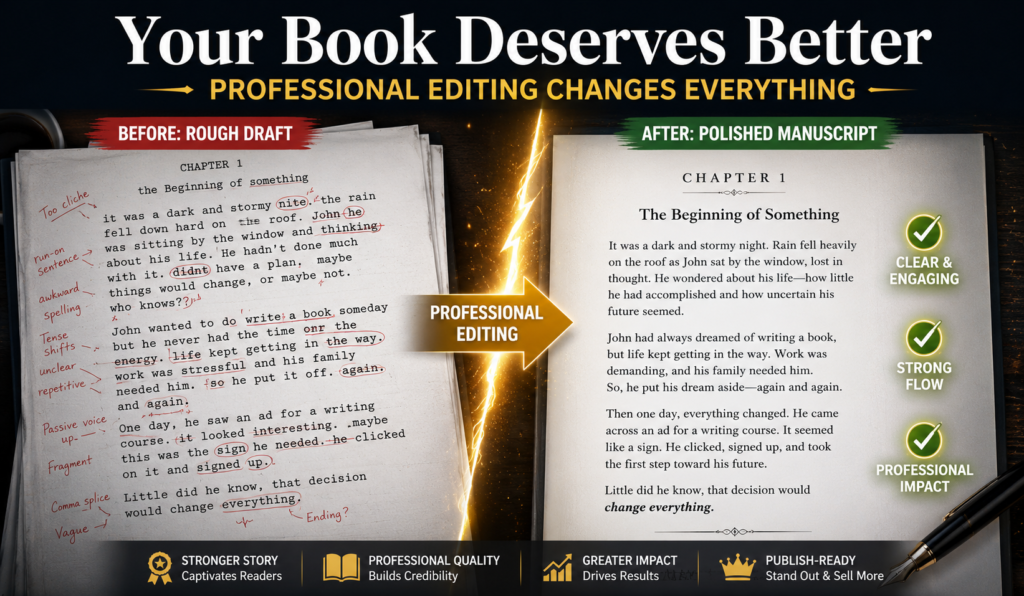
Proofreading is the final quality check before your book goes to print or digital publication. Furthermore, it’s not the same as editing — proofreading assumes the manuscript has already been edited and focuses exclusively on catching any remaining typos, formatting inconsistencies, and minor errors that slipped through previous rounds.
Moreover, proofreading is non-negotiable before publication. Consequently, even a single embarrassing typo on page one can generate negative reviews that hurt your sales permanently. Therefore, always invest in professional proofreading as your final pre-publication step.
Beta Reading
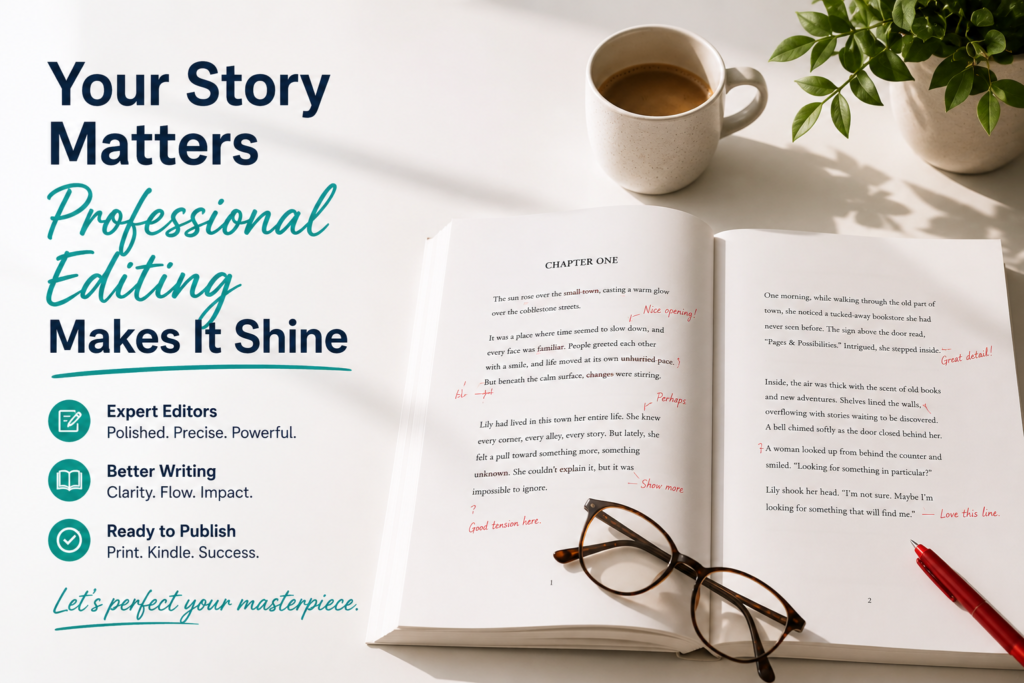
Additionally, some editors offer beta reading services — a preliminary read of your manuscript from a reader’s perspective. Furthermore, beta readers provide feedback on overall readability, engagement, pacing, and reader experience rather than technical corrections.
As a result, beta reading is most valuable in the early stages of your editing process — before investing in more detailed editing services. Moreover, it helps you identify major issues early, saving you money on subsequent editing rounds.
How Much Does Book Editing Cost in 2026?
Understanding book editing costs helps you plan your publishing budget realistically. Therefore, here’s a complete pricing breakdown for every type of editing service across all budget levels.
💚 Budget Tier — $30 to $150
What you get:
- Basic proofreading for shorter manuscripts (under 30,000 words)
- Copy editing for short manuscripts or novellas
- Grammar, spelling, and punctuation correction
- Basic consistency checks
- Tracked changes in Microsoft Word
- 1–2 rounds of corrections included
Best for: Short eBooks, novellas, blog-to-book projects, and authors on a very tight budget who need basic technical cleanup. Furthermore, this tier works well for non-fiction authors with straightforward, clear writing that primarily needs technical polishing rather than structural improvement.
Turnaround time: 3–7 days
💛 Standard Tier — $150 to $500
What’s included:
- Full copy editing for standard-length manuscripts (30,000–80,000 words)
- Line editing included in higher packages
- Comprehensive grammar, style, and consistency corrections
- Character name and timeline consistency checks
- Detailed editorial notes and suggestions
- Tracked changes with comments throughout manuscript
- 2 revision rounds included
- Style sheet provided
Best for: Serious indie authors, self-publishing professionals, and anyone preparing a full-length novel or non-fiction book for publication. Moreover, this is the sweet spot for most authors — comprehensive professional editing at an accessible price point.
Turnaround time: 1–3 weeks depending on manuscript length
🔴 Premium Tier — $500 to $2,000+
What’s included:
- Everything in the standard tier, plus:
- Full developmental editing with structural analysis
- Comprehensive editorial letter (detailed feedback document)
- Line editing plus copy editing in one pass
- Multiple revision rounds
- Author consultation calls included
- Market positioning advice
- Query letter review (for traditionally publishing authors)
- Proofreading pass included
Best for: Authors with serious publishing ambitions, anyone submitting to traditional publishers or literary agents, and authors investing significantly in their book’s commercial success. Furthermore, this tier delivers the comprehensive editorial support that transforms good manuscripts into exceptional, publication-ready books.
Turnaround time: 2–6 weeks depending on manuscript length and complexity
Book Editing Cost by Word Count
| Word Count | Proofreading | Copy Editing | Developmental |
|---|---|---|---|
| Under 10,000 | $30 – $80 | $50 – $120 | $100 – $250 |
| 10,000 – 30,000 | $80 – $150 | $120 – $250 | $250 – $500 |
| 30,000 – 60,000 | $150 – $300 | $250 – $500 | $500 – $1,000 |
| 60,000 – 100,000 | $300 – $500 | $500 – $900 | $1,000 – $2,000 |
| 100,000+ | $500 – $800 | $900 – $1,500 | $2,000+ |
What Factors Affect Book Editing Costs?
Several key factors influence how much you’ll pay for professional book editing. Therefore, understanding these helps you budget accurately and find the best value.
Manuscript Length
First and foremost, word count is the primary pricing factor for most editors. Consequently, longer manuscripts cost more — though many editors offer per-word rates that make pricing transparent and predictable. Furthermore, standard per-word rates in 2026 range from $0.005 to $0.03 per word depending on the type of editing and editor experience.
Type of Editing Required
Additionally, the type of editing significantly impacts cost. For instance, developmental editing requires the most time, expertise, and creative engagement — and therefore costs the most. On the other hand, proofreading is faster and more straightforward, making it the most affordable option. Consequently, your editing investment should match the stage your manuscript is at.
Manuscript Condition
Furthermore, heavily revised, complex manuscripts with numerous errors take significantly longer to edit than clean, well-structured ones. As a result, some editors charge more for manuscripts in poor condition. Therefore, doing a thorough self-edit before sending your manuscript to a professional editor can reduce your editing costs meaningfully.
Editor Experience and Specialization
Moreover, editors who specialize in your specific genre command higher rates. For example, a developmental editor who specializes in fantasy fiction brings genre-specific expertise that a generalist editor cannot match. However, this specialization is often worth the premium — particularly for genre fiction where reader expectations are highly specific.
Turnaround Time
Finally, rush editing always costs more. For instance, a standard 4-week turnaround is significantly cheaper than a 1-week rush delivery. Therefore, planning your editing timeline early saves you money and gets you better results.
How to Find the Best Affordable Book Editor in 2026
Finding a skilled, affordable freelance book editor requires knowing where to look and what to evaluate. Therefore, here’s your complete guide to finding the perfect editor for your manuscript.
✅ Freelance Platforms — Best Value Option
Freelance marketplaces are the best starting point for most authors. First of all, you can browse hundreds of editor profiles, read verified client reviews, compare pricing, and communicate directly before committing. Furthermore, payment protection ensures your manuscript investment is completely safe.
Moreover, freelance platforms host editors specializing in every genre — from romance and thriller to non-fiction business books and children’s literature. Consequently, you can find a specialist who deeply understands your specific type of writing.
✅ Editorial Freelancers Association
Additionally, professional associations like the Editorial Freelancers Association maintain directories of vetted, professional editors. Furthermore, members adhere to professional standards and code of ethics. However, rates through professional associations tend to be higher than freelance platforms.
✅ Author Community Referrals
Moreover, author communities — both online and in-person — are excellent sources of editor recommendations. For instance, genre-specific Facebook groups, writing forums, and NaNoWriMo communities frequently share trusted editor recommendations. As a result, you benefit from firsthand experience reports from authors whose work is similar to yours.
✅ Writing Conference Pitch Sessions
Finally, many writing conferences offer opportunities to meet editors directly through pitch sessions and speed networking events. Furthermore, these interactions let you gauge an editor’s personality and approach before committing to a working relationship.
How to Evaluate a Freelance Book Editor
Once you’ve found potential editors, evaluating them carefully ensures you hire the right person. Therefore, here’s exactly what to assess:
Review Their Portfolio and Testimonials
First of all, examine their portfolio carefully. Look for editing samples in your genre and read testimonials from authors they’ve worked with previously. Furthermore, strong testimonials specifically mentioning improved manuscript quality, clear communication, and met deadlines are the most valuable signals.
Request a Sample Edit
Moreover, many professional editors offer a free or paid sample edit of your first chapter or first 1,000 words. Consequently, this is the single best way to evaluate whether their editing style, feedback approach, and communication style are the right fit for your manuscript. Therefore, always request a sample edit before committing to a full manuscript project.
Assess Their Genre Knowledge
Additionally, ask directly about their experience with your specific genre. For instance, a romance editor needs to understand genre conventions like HEA (Happily Ever After) endings. Similarly, a thriller editor needs to understand pacing requirements unique to the genre. As a result, genre knowledge dramatically impacts editing quality.
Clarify Deliverables Upfront
Furthermore, before hiring any editor, confirm exactly what you’ll receive. For instance, will corrections be tracked in Microsoft Word? Will they provide an editorial letter? How many revision rounds are included? Moreover, what turnaround time are they committing to? Consequently, clear agreements prevent misunderstandings and protect your investment.
How to Prepare Your Manuscript for Editing
Getting your manuscript ready before sending it to your editor saves time, reduces costs, and improves results. Therefore, follow these preparation steps before submitting.
Complete Your Self-Edit First
First and foremost, do a thorough self-edit before sending your manuscript to a professional. Read it aloud to catch awkward phrasing. Furthermore, use grammar checking tools to fix obvious errors. As a result, your editor can focus on deeper improvements rather than basic mistakes — giving you far more value per dollar spent.
Format Your Manuscript Correctly
Additionally, submit your manuscript in the format your editor requests — typically a Microsoft Word document (.docx) with standard formatting: 12pt Times New Roman or Arial font, double-spaced lines, and 1-inch margins. Furthermore, number all pages and include a header with your name and manuscript title. Consequently, your editor can navigate your manuscript efficiently.
Write a Clear Brief
Moreover, provide your editor with a brief covering your genre, target audience, word count, editing type required, and any specific concerns you have about the manuscript. For instance, note any sections you’re unsure about or elements you particularly want feedback on. As a result, your editor can prioritize the areas that matter most to you.
Set Realistic Timeline Expectations
Finally, understand that quality editing takes time. Therefore, give your editor adequate time to do their best work — rushing an editor rarely produces the best results. Moreover, factor editing time into your overall publishing timeline from the very beginning.
Red Flags When Hiring a Book Editor
Knowing what to avoid protects your manuscript and your budget. Therefore, watch out for these warning signs:
Unrealistically low prices — Professional editing takes significant time and expertise. Consequently, prices dramatically below market rates often signal poor quality, inexperienced editors, or services that use automated tools rather than human expertise.
No portfolio or testimonials — Any professional editor should have verifiable samples and client feedback. Furthermore, reluctance to provide references is a serious red flag.
Guaranteed turnaround times that seem impossible — A 100,000-word developmental edit cannot be done properly in 48 hours. Therefore, unrealistic speed claims should raise immediate concern about editing quality.
No sample edit offered — Professional editors are confident enough in their work to offer samples. Moreover, refusal to provide a sample edit before a full manuscript commitment is unusual and concerning.
Vague service descriptions — Be cautious of editors who cannot clearly explain exactly what their service includes. As a result, you may receive something very different from what you expected.
Book Editing for Different Genres — What You Need to Know
Different genres have unique editing requirements. Therefore, understanding genre-specific needs helps you brief your editor more effectively.
Fiction Editing
Fiction editing focuses heavily on narrative structure, character consistency, dialogue authenticity, pacing, and plot logic. Furthermore, genre fiction (romance, thriller, fantasy, mystery) has specific reader expectations that your editor must understand deeply. Consequently, always hire a fiction editor with specific experience in your genre.
Non-Fiction Editing
Non-fiction editing prioritizes argument clarity, logical structure, factual accuracy, and audience accessibility. Moreover, the editor must ensure your content delivers on the promise made in your title and introduction. As a result, a good non-fiction editor functions almost like a co-author in terms of improving your message’s impact.
Children’s Book Editing
Additionally, children’s book editing requires specialized knowledge of age-appropriate vocabulary, sentence complexity, and developmental appropriateness. Furthermore, picture book editing also considers how text works alongside illustrations — a unique requirement not found in adult book editing.
Memoir and Personal Essay Editing
Finally, memoir editing balances factual accuracy with compelling narrative. Moreover, the editor must preserve your unique voice while improving clarity, structure, and emotional impact. Consequently, memoir editors need particularly strong sensitivity and interpersonal skills alongside technical editing expertise.
The Book Editing Process — What to Expect Step by Step
Understanding the editing process from start to finish helps you collaborate effectively with your editor. Therefore, here’s exactly what happens at each stage.
Step 1 — Initial Consultation
First, your editor reviews your manuscript brief and sample pages. Furthermore, they confirm the scope of work, timeline, and pricing. As a result, both you and your editor enter the project with aligned expectations.
Step 2 — Full Manuscript Read
Next, your editor reads your complete manuscript from start to finish without making changes. Moreover, this initial read gives them a complete picture of your book’s strengths, weaknesses, and overall narrative arc. Consequently, their subsequent editing is informed by a holistic understanding of your work.
Step 3 — Editing Pass
Subsequently, your editor works through your manuscript systematically, making tracked changes and adding comments throughout. Furthermore, for developmental editing, they compile a comprehensive editorial letter summarizing their major findings and recommendations.
Step 4 — Delivery and Review
Moreover, your editor delivers the edited manuscript with tracked changes visible and comments intact. As a result, you can see every suggested change and accept or reject each one individually. Furthermore, this preserves your authorial voice and ensures you remain in complete control of your work.
Step 5 — Revision Round
Finally, after reviewing your editor’s changes, you revise your manuscript accordingly. Additionally, most editing packages include at least one follow-up pass where your editor reviews your revisions and confirms all issues have been resolved. Consequently, you end the process with a polished, publication-ready manuscript.
Is Book Editing Worth the Investment?
Absolutely — without any question. In fact, professional editing is the single most important investment you can make in your book’s success.
Consider the alternative: an unedited or poorly edited book generates negative reviews that permanently damage your author reputation and tank your sales. Moreover, once readers leave reviews mentioning editing problems, no amount of marketing can overcome that negative perception. As a result, the cost of not editing is far greater than the cost of professional editing.
Furthermore, for self-published authors especially, editing is what separates books that succeed from books that disappear. Consequently, readers have higher expectations than ever — and professional editing is how you meet those expectations.
Frequently Asked Questions About Book Editing Services
Q: How much does a freelance book editing service cost in 2026? A: Freelance book editing costs range from $30 for basic proofreading of short manuscripts to $2,000+ for comprehensive developmental editing of full-length novels. Furthermore, most authors invest $150–$500 for standard copy editing of a full-length manuscript.
Q: What’s the difference between copy editing and proofreading? A: Copy editing is a comprehensive technical review covering grammar, style, consistency, and clarity throughout your manuscript. Proofreading, on the other hand, is the final quality check for any remaining typos and minor errors after all editing is complete. Therefore, copy editing always comes before proofreading.
Q: How long does book editing take? A: Proofreading typically takes 3–7 days. Copy editing takes 1–3 weeks. Developmental editing takes 2–6 weeks. Moreover, turnaround time depends significantly on manuscript length and the editor’s current workload.
Q: Do I need developmental editing or copy editing? A: If your manuscript has structural issues — plot holes, pacing problems, character inconsistencies — you need developmental editing first. Furthermore, if your manuscript is structurally sound but needs technical cleanup, copy editing is the right choice. When in doubt, request an editorial assessment first.
Q: Will an editor change my writing voice? A: No — a professional editor enhances your voice, not replaces it. Furthermore, all changes are delivered as suggestions via tracked changes, giving you complete control over what you accept or reject.
Q: How do I know if a book editor is qualified? A: Look for verifiable portfolio samples, client testimonials, genre experience, and professional memberships. Moreover, always request a sample edit before committing to a full manuscript project.
Q: Can I get my book edited if it’s not finished yet? A: Yes — developmental editing can begin on partial manuscripts. However, copy editing and proofreading require a complete, finalized manuscript. Therefore, the type of editing you need determines when you can start.
Q: What file format should I submit my manuscript in? A: Microsoft Word (.docx) is the universal standard for manuscript editing. Furthermore, ensure your document uses standard formatting — 12pt font, double-spaced, with page numbers — before submission.
El juego consciente representa una práctica el cual pretende preservar la moderación sobre el juego y evitar las consecuencias negativas asociados a las apuestas.
Requiere fijar topes personales al momento de empezar a jugar, y también detectar los indicios que indican un problema.
https://www.apkfiles.com/apk-622658/descargar-mobcash-apk-oficial-gesti-n-de-caja-m-vi
Además, promueve elecciones responsables y pretende que el esparcimiento siga siendo el objetivo central al el juego.
En resumen, este enfoque permite a los jugadores a conservar el dominio sobre sus decisiones y a gozar la actividad de forma equilibrada.